
Critical Urtext Editions
SCE 1001
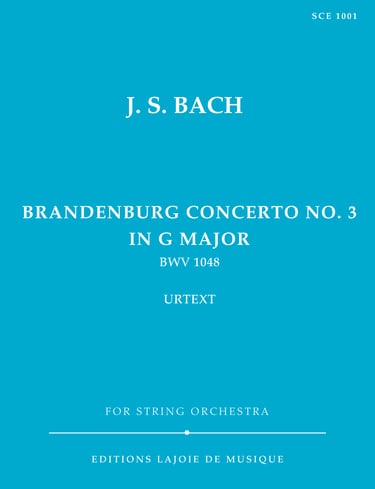
J. S. Bach - Brandenburg Concerto No. 3 in G Major, BWV 1048
Announcing the First Publication from LaJoie de Musique’s New Series of Critical Urtext Editions: Bach’s Brandenburg Concerto No. 3 in G Major, BWV 1048 LaJoie de Musique is thrilled to announce the inaugural release in its new series of Critical Urtext editions: Johann Sebastian Bach’s Brandenburg Concerto No. 3 in G Major, BWV 1048. This meticulously crafted edition is based on the esteemed Barenreiter Urtext Edition, ensuring the highest level of scholarly accuracy and authenticity. Our goal is to provide musicians and scholars with a version that is as faithful to Bach’s original manuscript as possible while offering practical editorial insights for modern performers. In keeping with the integrity of the source material, this edition retains the clarity and precision of the Barenreiter Urtext. However, LaJoie de Musique has introduced a few minor edits to enhance interpretative possibilities. Specifically, articulations and dynamics have been subtly adjusted in parallel passages to provide a more cohesive musical narrative. These editorial suggestions are carefully marked: added articulations appear in parentheses, and supplementary slurs are rendered as dotted lines, allowing performers to distinguish between Bach’s original intentions and modern interpretative aids. Notably, consistent with the manuscript tradition, figured bass symbols have been omitted from the cembalo part. This choice preserves the historical authenticity of the work, inviting keyboardists to engage in the informed improvisation characteristic of the Baroque continuo practice. By doing so, LaJoie de Musique aims to inspire a more creative and stylistically appropriate realization of the basso continuo. With this first release, LaJoie de Musique is excited to set a new standard for Critical Urtext editions that honor historical accuracy while embracing practical performance needs. This edition of Brandenburg Concerto No. 3 in G Major is an indispensable resource for musicians, educators, and Bach enthusiasts alike. We invite you to explore this masterwork through the lens of historical fidelity and modern musical insight.
Arrangements
STR 1001
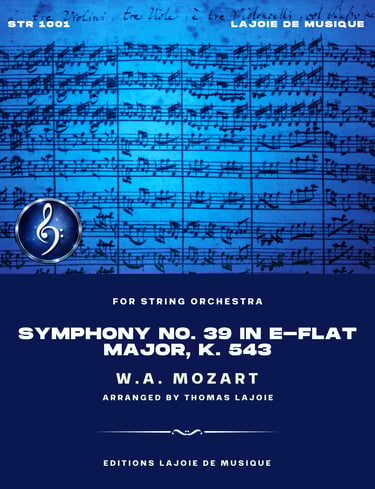
W. A. Mozart - Symphony No. 39 in E-flat major, K. 543 (1st movement)
Mozart’s Symphony No. 39 in E-flat Major, K. 543, is a work of grandeur and elegance, and the first movement, Allegro, showcases the composer’s mastery of symphonic form. This string orchestra arrangement artfully incorporates the important wind parts into the string texture, creating a rich and cohesive sound that retains the brilliance of the original orchestration. The movement begins with a stately introduction, followed by a lively and sophisticated Allegro filled with dynamic contrasts, intricate counterpoint, and spirited energy. Perfect for an advanced string ensemble, this arrangement offers a satisfying and rewarding experience, capturing the full drama and charm of one of Mozart’s final symphonic masterpieces.
STR 1002
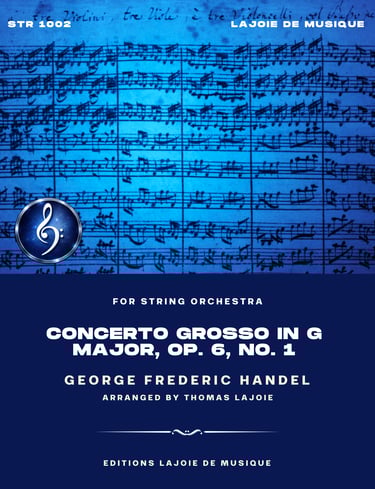
G. F. Handel - Concerto Grosso in G Major, Op. 6, No. 1
This arrangement of the first two movements from Handel’s Concerto Grosso in G Major, Op. 6, No. 1, has been thoughtfully crafted to be accessible to medium-level high school string orchestras while preserving the elegance and charm of the original work. The first movement, marked A Tempo Giusto, maintains its stately, grand character, but with slightly simplified passages to ensure technical accessibility without losing the rhythmic precision that drives the piece forward. The second movement, Allegro, with its lively, energetic themes and intricate counterpoint, has been adapted to balance challenge and playability, allowing young musicians to experience Handel’s signature interplay of voices. This arrangement offers an excellent opportunity for students to engage with the rich textures and expressive depth of Baroque music while developing ensemble skills and musicality.
STR 1003
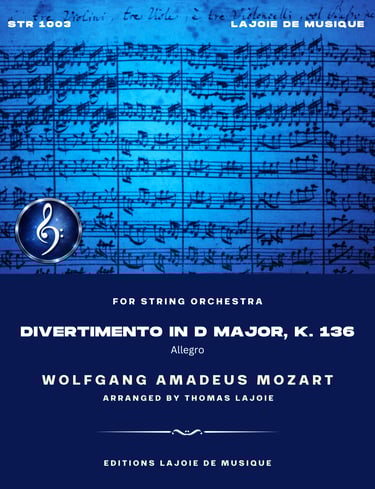
W.A. Mozart - Divertimento in D Major, K. 136
This arrangement of the first movement of Mozart’s beloved Divertimento in D Major, K. 136, is designed to capture the joyous spirit and sparkling energy of the original while making it accessible to school string orchestras. The lively, effervescent character of the movement is preserved, with its graceful melodies and playful rhythms intact. The rapid scalar passages, which are a hallmark of Mozart’s writing, have been carefully adapted to be more approachable for young musicians, ensuring that the technical challenges are balanced with playability. This allows the orchestra to focus on delivering a performance that is both confident and full of vitality. By maintaining the essential qualities of Mozart’s original, this arrangement offers students a delightful opportunity to engage with one of the Classical era’s most charming works, enhancing their musicality and ensemble skills.
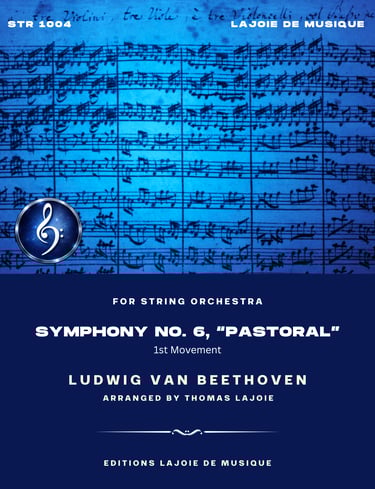
STR 1004
Beethoven - Symphony No. 6 "Pastoral"
This arrangement of the first movement of Beethoven’s Symphony No. 6, “Pastoral,” has been thoughtfully crafted to make this beloved work accessible to school string orchestras. The key has been shifted from F major to G major, offering a more comfortable range for developing players while preserving the warmth and tranquility of Beethoven’s original composition. The wind parts have been artfully woven into the string orchestra, ensuring that the full, rich sound of the symphony is maintained, even in this adapted version. While the movement is slightly abridged, it retains the essence of Beethoven’s idyllic countryside scenes, allowing students to experience the serene beauty and gentle flow of the Pastoral Symphony. This arrangement provides an excellent opportunity for young musicians to connect with Beethoven’s expressive writing while honing their ensemble skills in a piece that is both challenging and deeply rewarding to perform.
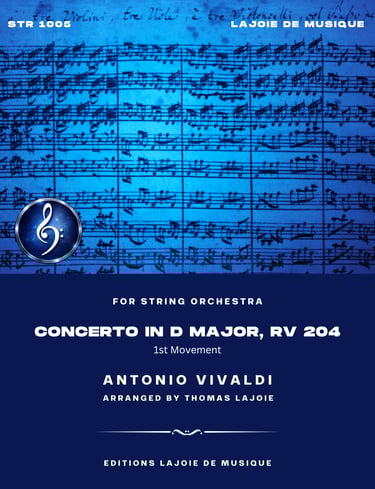
STR 1005
Antonio Vivaldi - Concerto in D Major, RV 204
This arrangement of Vivaldi’s Violin Concerto in D Major, RV 204 from La Stravaganza skillfully weaves the solo violin part into the first violins of the string orchestra, allowing the entire section to share in the virtuosic and expressive qualities of the original solo. By distributing the solo lines among the first violins, this version retains the lively character and intricate passages that make the concerto so captivating while ensuring that it remains approachable for an ensemble of medium-level players. The vibrant opening movement, with its spirited themes and rhythmic drive, is preserved in its full brilliance, while the lyrical second movement allows the first violins to explore Vivaldi’s melodic inventiveness. The final movement, full of energy and rhythmic interplay, offers a dynamic conclusion, providing an engaging and rewarding experience for both the musicians and the audience.
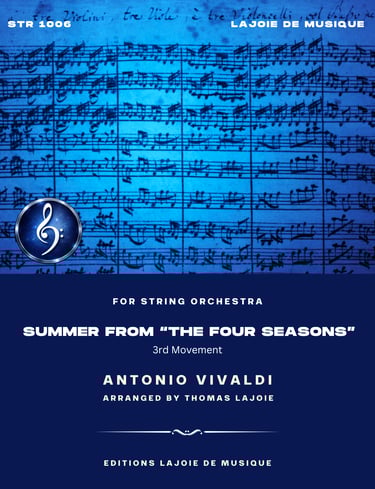
STR 1006
Antonio Vivaldi - Summer from "The Four Seasons", 3rd Movement
This string arrangement of the last movement from Vivaldi’s Summer from The Four Seasons masterfully incorporates the solo violin part into the violin sections, allowing the entire ensemble to partake in the thrilling intensity of this iconic piece. The virtuosic passages, known for their fiery energy and rapid tempo, have been skillfully adapted to retain the movement’s excitement and drive while making it more accessible for string orchestras. The signature stormy character of the music, with its vivid portrayal of thunder and lightning, is preserved in full force, offering students a dynamic and exhilarating performance experience. This arrangement captures the essence of Vivaldi’s original vision, providing young musicians with a challenging yet rewarding opportunity to engage with one of the most dramatic and powerful works in the Baroque repertoire.
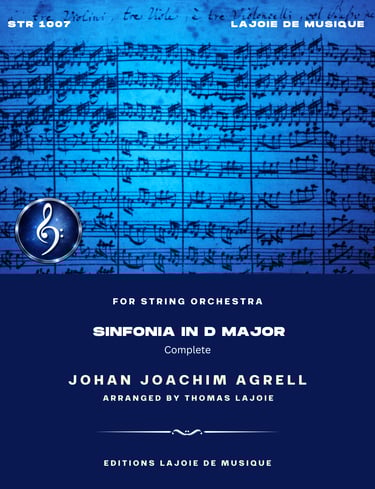
STR 1007
Agrell - Sinfonia in D Major (Complete)
This arrangement of Johan Joachim Agrell’s Sinfonia, originally in E major and now transposed to D major, is designed to enhance accessibility for school orchestras while retaining the elegance and charm of the original composition. By lowering the key to D major, the work becomes more approachable for young musicians, particularly in string sections, where the open strings and more familiar fingerings aid in playability. This version includes all of the movements of Agrell’s delightful sinfonia, allowing students to experience the full breadth of its Classical-era style. The first movement, with its lively and rhythmic energy, sets a bright and engaging tone. The second movement offers a more lyrical and expressive contrast, giving players an opportunity to explore phrasing and dynamics. The final movement, characterized by its buoyant and joyful themes, provides a spirited conclusion to the work, making this arrangement an ideal choice for school orchestras looking to explore the richness of 18th-century symphonic music.
STR 1008
Antonio Vivaldi - String Concerto in D Minor, RV 127
Antonio Vivaldi’s String Concerto in D Minor, RV 127, is a quintessential example of the Italian Baroque’s dramatic flair and structural elegance. Composed for a string ensemble, this concerto is a masterclass in contrast and dynamic interplay. The opening movement is marked by its bold, vigorous rhythms, which are punctuated by the interplay between the violins and the lower strings, creating a vivid dialogue. The middle movement, typically a slow and lyrical Largo, offers a moment of introspection with its expressive melodies, allowing the listener to savor Vivaldi’s gift for crafting poignant, singing lines. The final movement, with its spirited and dance-like character, showcases Vivaldi’s skill in fusing technical brilliance with emotional depth, making RV 127 a captivating and enduring work in the Baroque repertoire.
STR 1009
J. Stamitz - Sinfonia in D Major
This arrangement of the first movement of Carl Stamitz’s Sinfonia in D Major, WoIS I. D-21, is tailored for school orchestras, offering a delightful introduction to the lively and exuberant style of the Classical era. The movement opens with a bright and energetic theme, characterized by its clear, crisp rhythms and melodic lines that are accessible yet engaging for developing musicians. The arrangement retains the dynamic contrasts and playful character of Stamitz’s original composition, while simplifying some of the more technically demanding passages to ensure that students can focus on ensemble cohesion and musical expression. The use of D major further enhances the playability, making this piece an excellent choice for introducing young players to the elegance and rhythmic vitality of Classical sinfonias.
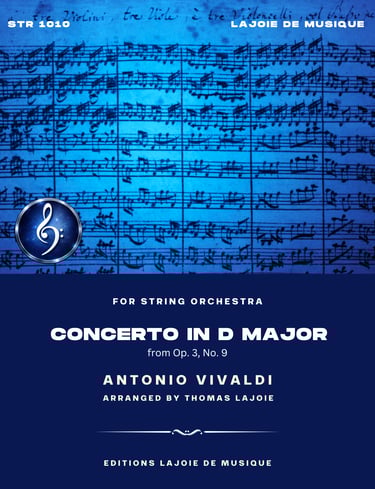
STR 1010
Antonio Vivaldi - Concerto in D Major from Op. 3, No. 9
I’m thrilled to present this new arrangement of the first movement of the Vivaldi’s Violin Concerto in D major from Op. 3, No. 9. While the original features a dazzling violin solo, this edition for school string orchestra artfully incorporates those parts into the first violin section. This ensures all the brilliance and excitement of the movement is preserved, even in a larger ensemble setting. Young musicians will relish the opportunity to delve into Vivaldi’s signature fast-slow-fast movement structure, experiencing both virtuosic passages and moments of tender lyricism. This arrangement not only introduces students to the timeless beauty of Baroque music but also challenges them to develop their technical and interpretive skills.
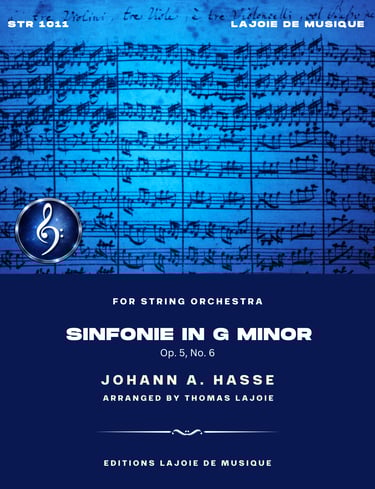
STR 1011
Hasse - Sinfonie in G Minor, Op. 5, No. 6
The first movement of Johann Adolph Hasse’s Sinfonie in G minor, Op. 5, No. 6, as arranged for string orchestra, vividly showcases his talent for merging Italianate expressiveness with the emerging Classical style. Marked Allegro, the movement begins with a powerful and dramatic theme, embodying the Sturm und Drang character often associated with G minor. The arrangement highlights the dynamic contrasts and sudden shifts in texture, which are key to Hasse’s ability to create tension and release. Structured in a clear sonata form, the development section delves into the thematic material through a series of modulations and contrapuntal interactions. In this string orchestra version, the violins take on a central role, driving the movement’s intensity, while the lower strings provide a solid harmonic foundation. This arrangement underscores Hasse’s capacity to craft music that is both emotionally compelling and structurally refined, affirming his significant role in the evolution of the symphony during the mid-18th century.
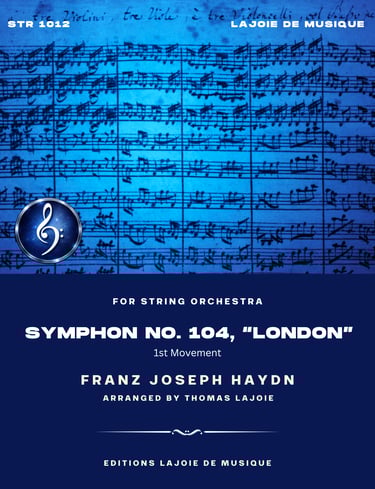
STR 1012
F. J. Haydn - Symphony No. 104, "London" (1st Movement)
The first movement of Haydn’s Symphony No. 104, as arranged for string orchestra with the inclusion of timpani, brilliantly captures the grandeur and sophistication of the original orchestration. Marked Adagio – Allegro, the movement opens with a stately and mysterious introduction, where the timpani adds a dramatic weight to the unfolding tension. As the movement transitions into the Allegro, the strings take center stage, driving the rhythmic energy and thematic development. The primary theme, characterized by its bold and assertive character, is expertly passed between the violins and lower strings, while the timpani punctuates key moments, enhancing the movement’s dynamic contrasts. This arrangement maintains the structural integrity of Haydn’s sonata form, with the development section showcasing intricate contrapuntal exchanges and harmonic exploration. The inclusion of the timpani adds a layer of rhythmic propulsion and grandeur, highlighting Haydn’s innovative use of orchestral color. The result is a performance that retains the full dramatic and emotional impact of the symphony, even in the more intimate setting of a string orchestra.
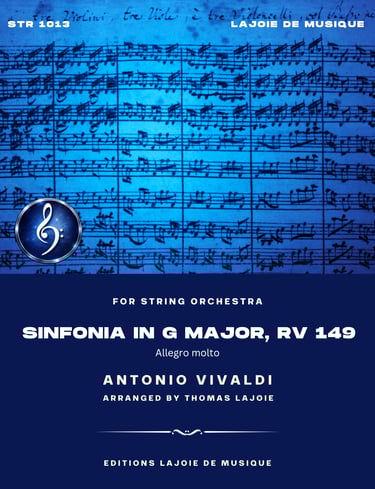
STR 1013
Antonio Vivaldi - Sinfonia in G Major, RV 149
This arrangement of the first movement of Vivaldi’s Sinfonia in G major, RV 149, has been thoughtfully adapted for school orchestras by simplifying some of the more virtuosic passages. While the original composition is known for its lively and energetic character, this version maintains the joyful spirit and rhythmic drive of the piece, making it accessible for younger musicians. The adjustments ensure that students can focus on developing their ensemble playing and musical expression without being overwhelmed by the technical demands of the original score. This arrangement allows school orchestras to experience the brilliance of Vivaldi’s music while providing a rewarding performance opportunity that fosters growth and confidence.
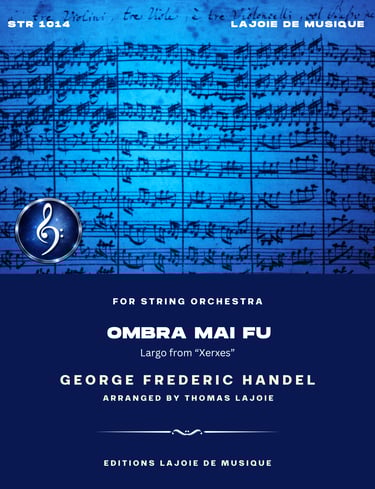
STR 1014
G. F. Handel - Ombra Mai Fu, Largo from "Xerxes"
This arrangement of Handel’s famous aria “Ombra mai fu” from the opera Xerxes (1738) for string orchestra preserves the serene and lyrical beauty of the original piece. Originally written for voice and small orchestra, this version adapts the tender, flowing melody for a full string ensemble, allowing the rich harmonies and expressive nuances to shine through. The lush sound of the strings enhances the aria’s tranquil, meditative mood, making it a perfect choice for both concert performances and educational settings. This arrangement offers a fresh interpretation of Handel’s timeless music while maintaining the emotional depth and grace that have made “Ombra mai fu” one of his most beloved works.
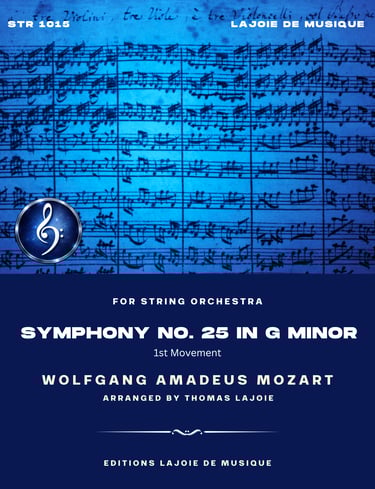
STR 1015
W. A. Mozart - Symphony No. 25 in G Minor (1st Movement)
This arrangement of the first movement of Mozart’s Symphony No. 25 in G Minor, K. 183 has been carefully adapted to make the piece accessible for younger string orchestras while preserving its signature intensity and momentum. Known for its driving rhythms and dark, urgent character, this movement offers students an exciting introduction to the emotional depth of Classical symphonies. To capture the movement’s spirited energy, spiccato bowing is recommended for the eighth-note passages, helping players achieve a light, crisp articulation. Grace notes can be interpreted as even notes or omitted entirely to simplify challenging sections. Most parts can be played entirely in first position, allowing students to focus on ensemble precision and expressive phrasing. With these thoughtful modifications, the arrangement retains the vibrancy and drama of the original while making it more approachable for developing musicians.
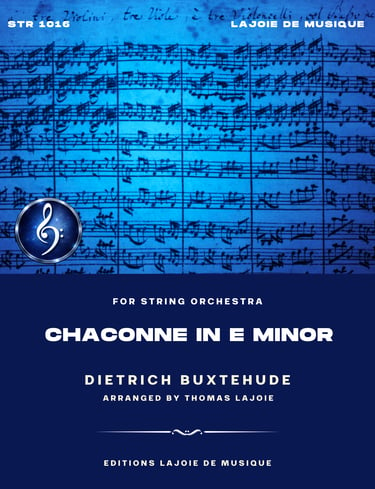
STR 1016
Dietrich Buxtehude - Chaconne in E Minor
The Chaconne in E minor, BuxWV 160, originally composed by Dietrich Buxtehude for solo organ, takes on a new life in this powerful arrangement for string orchestra. This piece showcases Buxtehude’s dramatic flair, with a stately, repeating bass line that serves as the foundation for increasingly intricate and expressive melodic layers. As the music unfolds, each variation intensifies, leading to a thrilling climax that highlights the interplay between the grounded bass and the soaring upper strings. The rich sonorities of the string orchestra bring warmth and depth to Buxtehude’s harmonies, making this work a rewarding challenge for musicians. With its dynamic contrasts and relentless forward momentum, the Chaconne in E minor promises to be a captivating and enjoyable piece to perform, providing both players and audiences with a vivid experience of Baroque drama and passion.
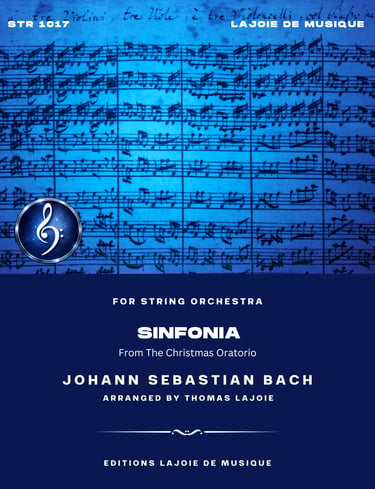
STR 1017
J. S. Bach - Sinfonia from The Christmas Oratorio
This string orchestra arrangement of the Sinfonia from Bach’s Christmas Oratorio, BWV 248, captures the serene beauty and pastoral charm of the original. With its lilting rhythms and expressive melodic lines, this piece evokes the peaceful countryside imagery often associated with the Nativity. The arrangement retains the delicate interplay between the parts, offering players an opportunity to focus on blending, phrasing, and dynamic contrasts. Accessible to intermediate ensembles, this arrangement allows students to experience one of Bach’s most tender and contemplative works. Whether performed in a holiday concert or as part of a sacred program, this Sinfonia is sure to enchant both performers and audiences with its timeless grace.
STR 1018
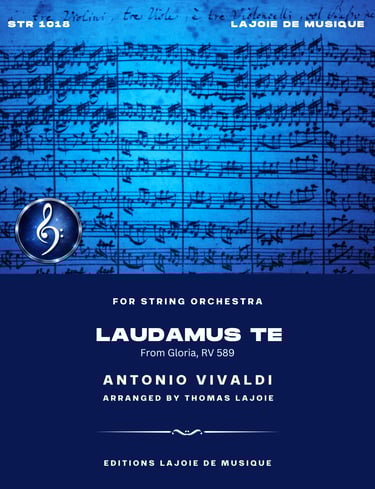
Antonio Vivaldi - Laudamus Te (From Gloria, RV 589)
The string arrangement of Vivaldi’s Laudamus Te from the Gloria, RV 589, brings a refreshing intimacy to this vibrant duet. By transferring the interplay of the vocal lines to the strings, the arrangement captures the effervescent counterpoint and joyful energy that define this movement. The violins skillfully alternate between lyrical and virtuosic passages, mirroring the original soprano lines, while the lower strings provide a rich harmonic foundation. This adaptation retains the exuberance of Vivaldi’s Baroque style, allowing the brilliance of his composition to shine through in a purely instrumental format.
STR 1019
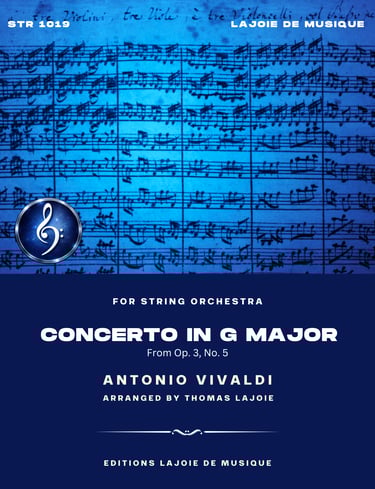
Antonio Vivaldi - Concerto in G Major (From Op. 3, No. 5)
Vivaldi’s Concerto for Two Violins, Op. 3, No. 5, originally in A major, has been reimagined in G major for this string orchestra arrangement, making it more accessible while preserving the brilliance of the original. The virtuosic solo violin parts have been thoughtfully adapted and woven into the tutti strings, allowing the entire ensemble to share in the work’s lively interplay and intricate textures. This arrangement highlights Vivaldi’s signature energy and vibrant rhythms, making it an excellent choice for ensembles seeking to explore the Baroque style in a cohesive, unified format. Both engaging to play and delightful to hear, this piece brings Vivaldi’s timeless genius to the forefront of any performance.
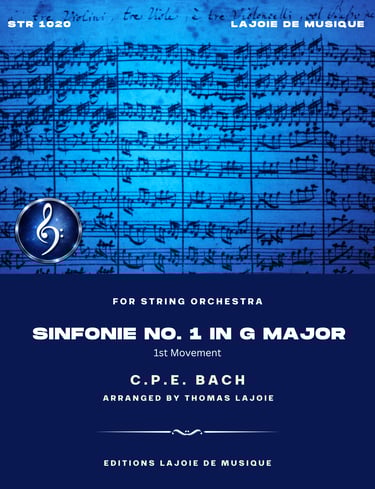
STR 1020
C. P. E. Bach - Sinfonie in G Major (1st Movement)
Carl Philipp Emanuel Bach’s Sinfonie in G Major, Wq 182/1 is a masterful example of the Empfindsamer Stil (Sensitive Style) that defined much of his music. Written during his Hamburg years, this work is characterized by sudden shifts in mood, dynamics, and articulation, all of which demand keen attention from performers. These contrasting elements create a vivid and emotionally engaging musical landscape, showcasing Bach’s innovative approach to symphonic writing. In this arrangement for advancing orchestras, the striking contrasts of articulation and dynamics are key to capturing the energy and expressiveness of the original. Players will explore a range of techniques, from crisp staccato passages to lyrical legato lines, ensuring each dramatic shift is brought to life with precision and style. This adaptation maintains the brilliance of Bach’s composition while making it accessible to younger ensembles, providing an excellent opportunity to develop both technical and interpretive skills.
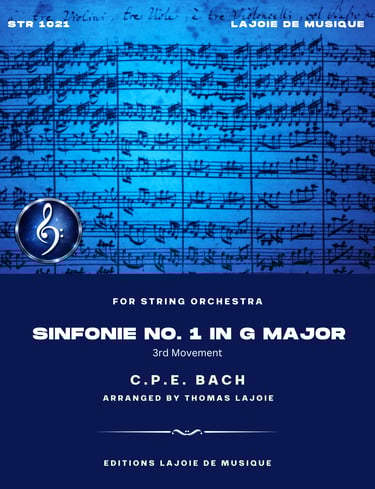
STR 1021
C. P. E. Bach - Sinfonie in G Major (3rd Movement)
Carl Philipp Emanuel Bach’s Sinfonie in G Major, Wq 182/1, third movement (*Presto*) bursts with energy and vitality, showcasing the composer’s bold and forward-thinking style. This movement exemplifies the Sturm und Drang aesthetic, with its driving rhythms, rapid passages, and sudden dynamic shifts that demand precision and intensity from the ensemble. Bach’s mastery of contrast and phrasing creates a thrilling musical experience, requiring performers to bring out the movement’s dramatic character and inherent momentum. In this arrangement for string orchestra, the music remains true to Bach’s original, with only the addition of carefully considered bowings to facilitate clarity and consistency across the ensemble. The Presto challenges advancing players to maintain crisp articulation, seamless phrasing, and an unwavering tempo, all while capturing the movement’s exuberant spirit. This final movement is both a technical showcase and an exhilarating closer, leaving audiences captivated by its brilliance and energy.
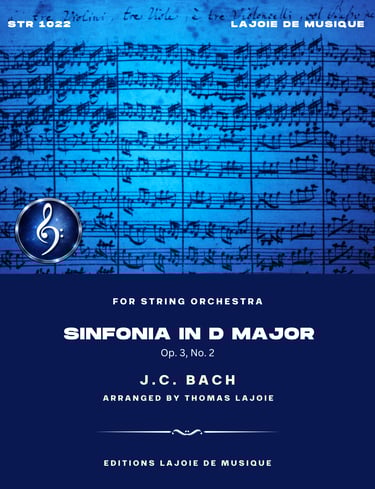
STR 1022
J. C. Bach - Sinfonia in D Major (Op. 3, No. 2)
Johann Christian Bach’s Sinfonia in D Major (Op. 3, No. 2), originally marked as an “Overture,” exemplifies the graceful elegance and clear formal structure that define the early Classical style. Published in 1763 as part of his Opus 3 set, this spirited work reflects Bach’s flair for melodic charm and balanced phrasing, which so influenced the young Mozart during his formative years. Though originally composed as a three-movement sinfonia, this arrangement features only the first movementa lively and engaging Allegro that stands well on its own as a concert selection. This arrangement preserves the integrity of the original string parts while incorporating thoughtful editorial bowings and fingerings designed to support student ensembles in rehearsal and performance. It provides a rewarding opportunity to explore Classical style, articulation, and ensemble playing while engaging with the music of one of the most stylistically refined composers of the 18th century. Whether performed as a concert opener or as part of a unit on Classical repertoire, this movement offers both elegance and vitality in equal measure.
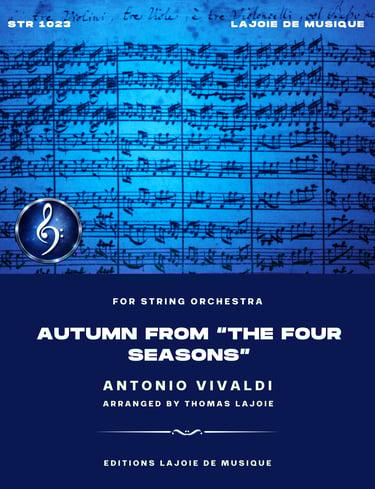
STR 1023
Antonio Vivaldi - Autumn From "The Four Seasons"
This educationally accessible arrangement of Vivaldi’s “Autumn” offers students a rewarding opportunity to experience one of the Baroque era’s most iconic works in its full musical form. Presented in the original key and unabridged, this setting allows students to explore authentic Baroque style, articulation, and form without being overwhelmed by technical barriers. The solo violin part has been thoughtfully adapted into the first violin section, preserving the spirit and character of the original while simplifying the passagework. First violins and violas will encounter some third position, and cellists will have brief moments in fourth, making this piece a strong choice for developing shifting technique and expressive playing. The remainder of the ensemble remains comfortably in first position. Ideal for concert programming, festival performance, or Baroque unit study, this arrangement helps bridge the gap between historical repertoire and modern student ensembles—offering a musically satisfying experience for players and audiences alike.
STR 1024
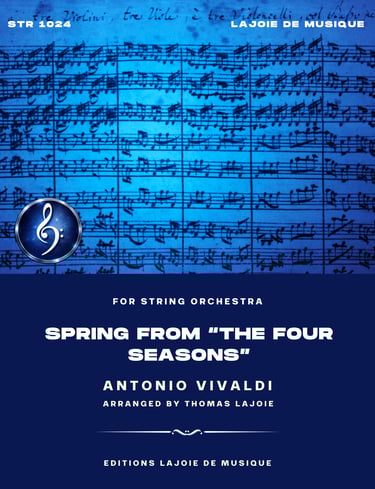
Antonio Vivaldi - Spring From "The Four Seasons"
This arrangement of the first movement of Vivaldi’s Spring offers student ensembles a joyful and accessible path into one of the most beloved works of the Baroque era. Transposed from E major to D major for greater playability and resonance on string instruments, this edition maintains the full structure of the original while simplifying the technical demands. Solo passages have been carefully woven into the first violin section in a way that preserves their lyrical and energetic character. The result is a version that captures the spirit and vitality of Vivaldi’s music while keeping the parts within reach for developing players. Ideal for spring concerts, festivals, or as part of a Baroque unit, this arrangement supports the development of stylistic articulation, dynamic contrast, and ensemble precision. It invites students to experience the elegance and exuberance of Vivaldi’s world, while providing directors with a flexible, pedagogically sound addition to their concert repertoire.
STR 1025
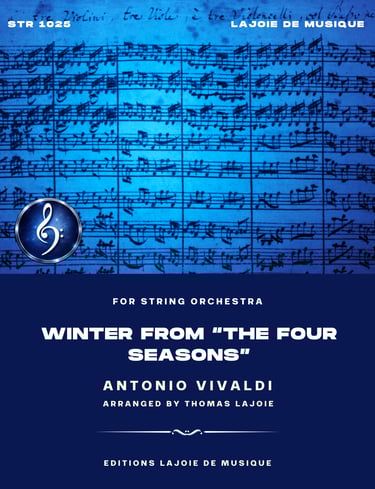
Antonio Vivaldi - Winter From "The Four Seasons"
This full-length arrangement of the first movement of Vivaldi’s Winter offers student ensembles an exciting and accessible entry into one of the most vivid and dramatic movements of the Baroque repertoire. Transposed from F minor to E minor for ease of reading and playability, this edition retains the complete musical form and emotional impact of the original. The virtuosic solo passages have been thoughtfully simplified and integrated into the first violin section, maintaining their icy brilliance and intensity while reducing technical difficulty. The famous “chattering teeth” effect—originally written as rapid, difficult double stops—has been creatively reimagined by distributing the rhythm between the first and second violins an octave lower, preserving the musical effect without overwhelming the players. Helpful fingerings are provided for chromatic passages and accidentals, supporting confident performance and clean intonation. This arrangement is ideal for winter concerts, festivals, and ensemble study of Baroque articulation, dynamic contrast, and dramatic storytelling through music.
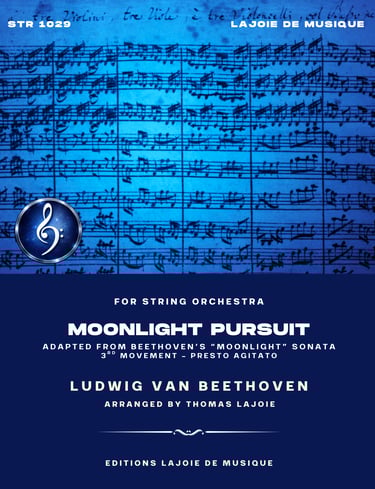
STR 1029
Beethoven/LaJoie - Moonlight Pursuit
Based on Beethoven’s Piano Sonata No. 14, Op. 27, No. 2 (III. Presto Agitato)
Ludwig van Beethoven’s Piano Sonata No. 14 is most famous for its somber, titular "Moonlight" opening, but it is the third movement—the Presto Agitato—that provides the work’s true emotional climax. In this reimagining, titled "Moonlight Pursuit," the work is liberated from the keyboard and transformed into a cinematic tour de force for string orchestra.
Transposed to D minor to harness the dark, resonant power of the string family’s open lower registers, this arrangement moves beyond a literal transcription. The original piano arpeggios, which rely on individual finger dexterity, are here replaced by relentless, driving 8th-note pulses. These collective rhythmic crescendos create a "treadmill" of tension, punctuated by explosive chordal outbursts that utilize the full vertical weight of the ensemble.
The "pursuit" is a relentless one, demanding rhythmic precision and a keen sense of dynamic contrast. While the work retains the stormy fire of Beethoven’s original vision, it speaks a new, idiomatic language—one where the soaring lyricism and aggressive textures of the strings turn a solo masterpiece into a monumental orchestral chase.
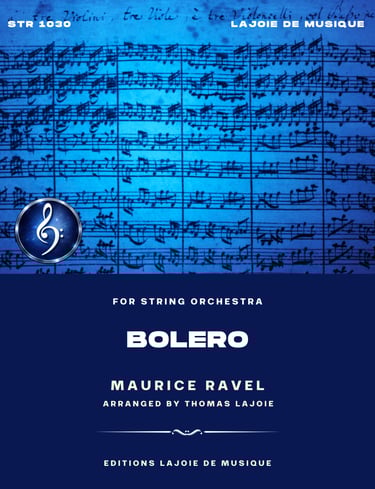
STR 1030
Ravel - Bolero
This arrangement of Maurice Ravel’s Boléro reimagines the full orchestral masterpiece for large string orchestra with snare drum, preserving the original key and the work’s iconic structural design. Conceived as an extended orchestral crescendo, Boléro is presented here with careful attention to its evolving texture, beginning with thinner scoring and gradually building in density and intensity.
To reflect the original orchestration, brief solo passages are incorporated at the opening, allowing individual players to capture the transparency of Ravel’s initial textures before the full ensemble enters. As the piece unfolds, all sections actively participate in the signature repeated Gs of the bolero rhythm—including the basses—ensuring a fully engaged ensemble and a rich, layered sound. The snare drum part maintains the traditional rhythmic foundation throughout, anchoring the work’s unmistakable pulse.
This edition is only slightly abridged while maintaining the integrity and dramatic arc of the original. Rehearsal marks are strategically placed to support efficient ensemble preparation, and extensive bowings are included to unify articulation and style. Fingerings are provided in higher positions and in passages with complex flat keys, making this arrangement both a musically rewarding and pedagogically practical addition to the string orchestra repertoire.


STR 1031
Holst - Jupiter Hymn Tune "Thaxted"
Bring the warmth and grandeur of Holst’s beloved “Jupiter” hymn tune to your string orchestra! This arrangement expands the celebrated melody into a complete short work, giving young players the opportunity to experience its soaring character and expressive beauty from beginning to end. The rich harmonic material originally heard in the brass has been thoughtfully woven throughout the string parts, creating a warm, full ensemble sound while keeping the technical demands accessible to developing players.
With its beautiful harmonies, expressive melodic writing, and opportunities for dynamic shaping and lyrical phrasing, this arrangement allows a young orchestra to create a remarkably rich and mature sound without requiring advanced technique. A rewarding introduction to Holst’s music and a beautiful addition to any concert program, it offers students the chance to experience the power of great orchestral writing in an approachable and satisfying setting.
Phone
info@lajoiedemusique.com
(980) 428-6181
© 2026. All rights reserved.